What You’ll Learn in This Guide
Internal and external limb lengthening methods are both used to gradually increase bone length or correct limb length differences. However, the patient experience, comfort level, recovery process, cost, visibility of the device, and daily care requirements can be very different.
Choosing between internal and external limb lengthening should always be based on orthopedic evaluation, medical suitability, treatment goals, budget, and recovery expectations.
At Carenfly, we help international patients understand available limb lengthening options, communicate with trusted healthcare providers in Turkey, and plan their treatment journey with clear expectations.
Internal vs External Limb Lengthening Overview
The main difference between internal and external limb lengthening is the type of device used during treatment.
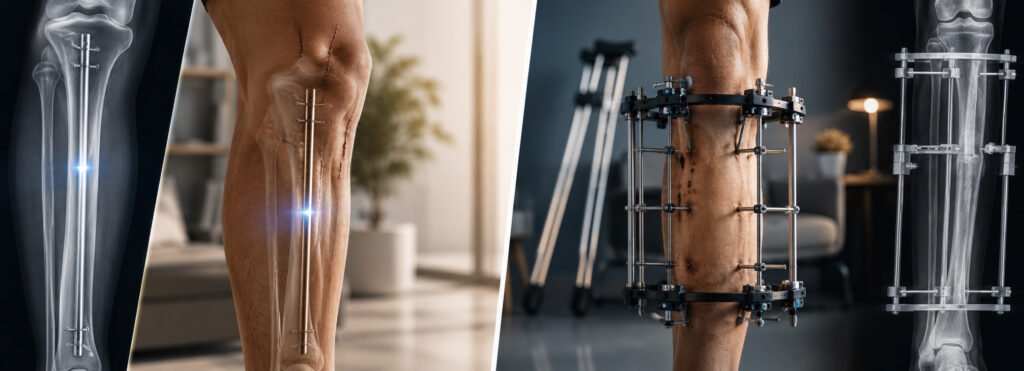
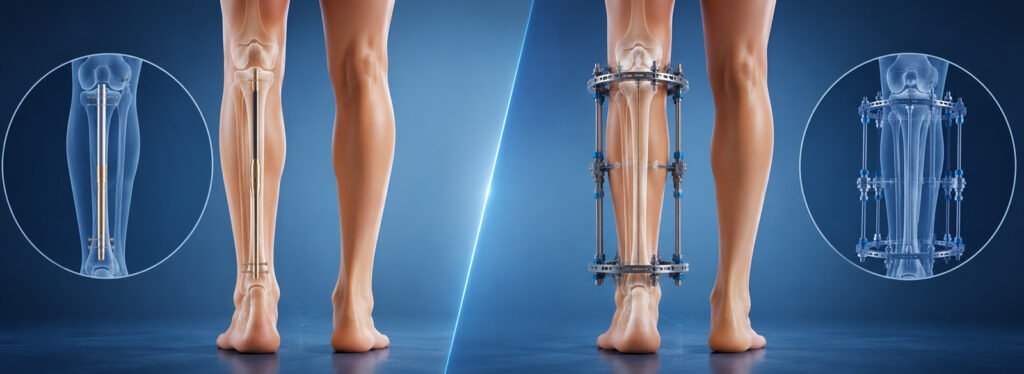
Internal limb lengthening uses a nail placed inside the bone. External limb lengthening uses a frame outside the leg connected to the bone with pins or wires. Both methods can be effective in selected patients, but they offer different advantages and limitations.
Modern internal systems are often preferred by patients seeking greater comfort and a more discreet recovery process. External systems may still be used in selected orthopedic cases, especially when the medical situation requires more complex correction.
What Is Internal Limb Lengthening?
Internal limb lengthening is a modern orthopedic technique that uses an internal lengthening nail placed inside the bone. The device gradually lengthens the bone during the recovery phase according to the surgeon’s treatment plan.
Because the device is placed inside the body, internal systems are usually less visible and may provide a more comfortable recovery experience for selected patients.
Internal limb lengthening may offer:
- Less visible hardware
- Improved comfort during recovery
- Easier daily care compared to external frames
- More discreet appearance during the treatment process
- Potentially better mobility experience for selected patients
However, internal systems may be more expensive because of the advanced implant technology used.
What Is External Limb Lengthening?
External limb lengthening uses an external fixation frame attached outside the leg. The frame is connected to the bone through pins or wires and gradually separates the bone segments so new bone can form.
External fixation methods have been used in orthopedic surgery for many years and may still be suitable in selected cases. They may be considered for deformity correction, limb length differences, or situations where an external system is medically preferred.
External limb lengthening may involve:
- A visible external frame
- More daily care and cleaning routines
- Pin-site care requirements
- More lifestyle adjustments during recovery
- Potentially lower cost compared to some internal systems
Internal vs External Limb Lengthening Comparison Table
| Feature | Internal Limb Lengthening | External Limb Lengthening |
|---|---|---|
| Device Position | Inside the bone | Outside the leg |
| Visibility | Less visible | Visible external frame |
| Daily Care | Generally easier | Requires more cleaning and pin-site care |
| Comfort | Often more comfortable for selected patients | May be less comfortable due to external hardware |
| Mobility | May allow easier movement in selected cases | May require more lifestyle adjustments |
| Scarring | Usually smaller visible scars | May leave more visible pin-site marks |
| Cost | Often higher | May be more affordable |
| Best For | Selected cosmetic height increase patients | Selected deformity correction or complex orthopedic cases |
Which Method Is More Comfortable?
Many patients consider comfort one of the most important factors when comparing limb lengthening methods. Internal systems are often associated with improved comfort because there is no large external frame attached to the leg.
External fixators may cause more discomfort because of the visible frame, pin sites, and daily cleaning requirements. However, pain and comfort levels vary from patient to patient and depend on the method, rehabilitation plan, and individual recovery response.
For more information about pain and recovery expectations, read:
Is Limb Lengthening Surgery Painful?.
Recovery and Rehabilitation Comparison
Both internal and external limb lengthening methods require structured rehabilitation, regular follow-up appointments, and physical therapy. Recovery is a gradual process and may take several months depending on the patient’s treatment plan.
Internal systems may make some daily activities and rehabilitation routines easier for selected patients. External systems may require more careful daily maintenance, especially around pin sites.
During recovery, patients may need:
- Regular X-rays
- Orthopedic follow-up appointments
- Physical therapy sessions
- Mobility support
- Careful monitoring of bone healing
For a complete guide, visit:
Recovery After Limb Lengthening Surgery in Turkey.
Mobility and Daily Life
Mobility during recovery can be different depending on the device type and the surgeon’s instructions. Internal systems may allow a more discreet and flexible recovery experience, but patients still need to follow medical restrictions carefully.
External fixators may make clothing, sleeping, walking, and daily movement more challenging because of the external frame. Patients should understand these practical differences before choosing a method.
International patients should also consider travel, accommodation, airport transfers, hotel accessibility, and follow-up care when planning treatment in Turkey.
Scarring and Physical Appearance
Internal limb lengthening usually involves smaller visible scars compared to external fixation systems. Since the device is placed inside the bone, the recovery process may look more discreet from the outside.
External fixators involve pins or wires connected through the skin, which may leave more visible marks after treatment. For patients considering cosmetic height increase, appearance during and after recovery may be an important factor.
However, the final method should not be selected based only on appearance. Medical suitability and safety should always come first.
Cost Differences Between Internal and External Limb Lengthening
Cost is another major difference between internal and external methods. Internal limb lengthening systems are often more expensive because they use advanced implant technology.
External fixation methods may be more affordable in some cases, but patients should also consider rehabilitation, follow-up appointments, accommodation, recovery support, and total treatment planning.
The final cost can depend on:
- Surgical method
- Hospital and surgeon experience
- Device or implant type
- Lengthening goal
- Physical therapy requirements
- Length of stay in Turkey
To understand pricing factors in more detail, read:
Limb Lengthening Surgery Cost in Turkey.
Which Limb Lengthening Method Is Right for You?
There is no single best limb lengthening method for every patient. The right choice depends on medical evaluation, bone structure, treatment goals, recovery expectations, lifestyle needs, and budget.
Internal systems may be suitable for selected patients who want a more discreet and comfortable recovery experience. External methods may be recommended in some complex orthopedic cases or when the surgeon believes an external system is more appropriate.
Before deciding, patients should ask:
- Am I medically suitable for limb lengthening surgery?
- Which method is safest for my case?
- How long will recovery take?
- How much height gain is realistic?
- What are the risks of each method?
- What is included in the treatment package?
For height gain expectations, read:
How Much Height Can You Gain with Limb Lengthening Surgery?.
Related Limb Lengthening Guides
Explore more resources to understand limb lengthening surgery, recovery, cost, and treatment planning in Turkey.
-
- Limb Lengthening Surgery in Turkey
Read the main treatment guide, including cost, methods, safety, recovery, and hospital selection.
- Limb Lengthening Surgery in Turkey
-
- Limb Lengthening Surgery Cost in Turkey
Learn about pricing factors, treatment packages, and what may affect the total cost.
- Limb Lengthening Surgery Cost in Turkey
-
- How Much Height Can You Gain with Limb Lengthening Surgery?
Understand realistic height gain expectations and treatment planning factors.
- How Much Height Can You Gain with Limb Lengthening Surgery?
-
- Is Limb Lengthening Surgery Painful?
Explore pain management, rehabilitation, and patient recovery expectations.
- Is Limb Lengthening Surgery Painful?
-
- Traveling to Turkey for Limb Lengthening Surgery
Plan your medical journey, accommodation, follow-up care, and recovery stay.
- Traveling to Turkey for Limb Lengthening Surgery
- Who Is a Good Candidate for Limb Lengthening Surgery?
Learn which patients may be suitable after orthopedic evaluation.
Frequently Asked Questions
Is internal limb lengthening better than external limb lengthening?
Internal limb lengthening may offer better comfort, less visible hardware, and easier daily care for selected patients. However, the best method depends on the orthopedic evaluation and the patient’s medical condition.
Is external limb lengthening still used?
Yes. External limb lengthening may still be used in selected orthopedic cases, especially for deformity correction, limb length differences, or complex treatment plans.
Which method is more painful?
Pain varies from patient to patient. External fixators may involve more discomfort because of the external frame and pin sites, while internal systems may provide a more comfortable recovery experience for selected patients.
Which method leaves less scarring?
Internal systems are usually associated with smaller visible scars, while external fixators may leave more visible pin-site marks.
Why are internal limb lengthening nails more expensive?
Internal nails often use advanced implant technology, which can increase the total treatment cost. Hospital, surgeon, rehabilitation, and accommodation factors may also affect pricing.
Can international patients travel during recovery?
Travel should only be planned with medical approval. International patients should carefully organize accommodation, transfers, follow-up appointments, and rehabilitation support during recovery.
Start Your Free Medical Consultation