
What You’ll Learn in This Guide
- Why Diet Matters After Sleeve Gastrectomy
- The First Days After Surgery
- Week 1: Clear Liquids
- Week 2: Full Liquids
- Weeks 3–4: Pureed Foods
- Weeks 5–6: Soft Foods
- Returning to Solid Foods
- Foods to Avoid After Sleeve Gastrectomy
- Protein and Hydration Tips
- Vitamins and Supplements
- Sample Daily Meal Plan
- Common Mistakes After Surgery
- Planning Recovery in Turkey
- Related Bariatric Surgery Guides
- Frequently Asked Questions
After sleeve gastrectomy, eating habits change significantly. The stomach is smaller, meals are reduced, and the digestive system needs time to heal. For this reason, most patients follow a gradual diet plan that starts with liquids and slowly moves toward soft foods and regular solid meals.
The exact diet plan should always be provided by the patient’s bariatric surgeon or dietitian. However, understanding the general stages can help international patients prepare for recovery, ask better questions, and avoid common mistakes after surgery.
At Carenfly, we help patients planning sleeve gastrectomy in Turkey understand the treatment journey, recovery expectations, nutrition stages, and follow-up support needed after bariatric surgery.
Why Diet Matters After Sleeve Gastrectomy
Diet is one of the most important parts of recovery after sleeve gastrectomy. The goal is not only to lose weight, but also to protect the healing stomach, prevent discomfort, support hydration, and maintain proper nutrition.
After surgery, the stomach can only tolerate small amounts of food and liquid. Eating too fast, choosing the wrong texture, or drinking sugary and carbonated beverages too early may cause nausea, vomiting, reflux, pain, or dehydration.
A structured diet plan helps patients:
- Protect the healing stomach
- Stay hydrated
- Meet protein needs
- Reduce nausea and discomfort
- Move safely through food texture stages
- Build long-term healthy eating habits
The First Days After Surgery
In the first days after sleeve gastrectomy, patients are usually monitored by the medical team. The main focus is hydration, pain control, early walking, and making sure the patient can tolerate small sips of liquid.
Patients should not rush eating. The stomach is healing, and every step should be guided by the bariatric team. Some hospitals may begin with very small sips of water, while others may follow a slightly different schedule depending on the patient and hospital protocol.
Common early instructions may include:
- Take very small sips
- Drink slowly
- Avoid carbonated drinks
- Avoid sugar-heavy liquids
- Stop drinking if nausea or discomfort begins
- Follow the surgeon’s and dietitian’s plan closely
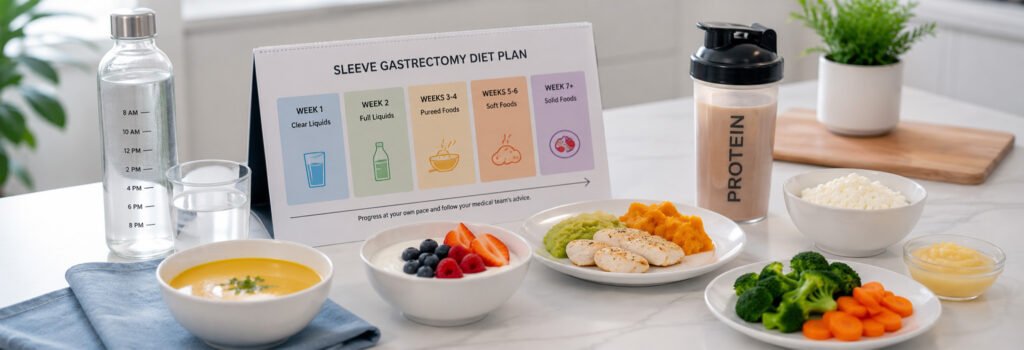
Week 1: Clear Liquids
During the first week, many patients begin with clear or very light liquids. This stage helps the stomach heal while keeping the body hydrated.
Examples may include:
- Water
- Sugar-free clear liquids
- Clear broth
- Decaffeinated tea
- Sugar-free electrolyte drinks if approved
- Sugar-free gelatin if recommended
Patients should avoid drinking large amounts at once. Small, frequent sips are usually better tolerated than trying to drink quickly.
The most important goal during this stage is hydration. If a patient cannot drink enough fluids, feels dizzy, has persistent vomiting, or shows signs of dehydration, they should contact the medical team immediately.
Week 2: Full Liquids
After the clear liquid stage, many patients move to full liquids. This stage may include more nutritious liquids and protein-focused options.
Examples may include:
- Protein shakes approved by the care team
- Low-fat yogurt without added sugar
- Smooth soups without chunks
- Milk or lactose-free alternatives if tolerated
- Thin, blended foods approved by the dietitian
Protein becomes more important during this stage. Many bariatric programs encourage patients to focus on protein intake because it supports healing, muscle preservation, and recovery.
Patients should still avoid carbonated drinks, alcohol, high-sugar beverages, and very thick foods unless approved by the dietitian.
Weeks 3–4: Pureed Foods
During the pureed food stage, patients may begin eating foods that have a smooth, soft texture. Food should be blended well and should not contain hard pieces, seeds, skins, or chunks.
Suitable options may include:
- Pureed lean chicken or turkey
- Pureed fish
- Mashed beans or lentils
- Soft scrambled egg if tolerated
- Low-fat cottage cheese
- Greek yogurt without added sugar
- Pureed vegetables
At this stage, patients should eat slowly and stop before feeling full. A few extra bites can cause discomfort because the stomach is much smaller after surgery.
It is also important to separate drinking and eating if the bariatric team recommends it. Many patients are advised not to drink large amounts during meals because it may cause discomfort or reduce food tolerance.
Weeks 5–6: Soft Foods
After the pureed stage, many patients move to soft foods. These foods should be easy to chew and gentle on the stomach.
Examples may include:
- Soft fish
- Tender chicken in very small pieces
- Eggs
- Soft cooked vegetables
- Low-fat cheese if tolerated
- Soft fruits without skin if approved
- Beans or lentils with a soft texture
Patients should chew very well, eat slowly, and introduce one new food at a time. This makes it easier to understand which foods are tolerated and which foods cause discomfort.
Returning to Solid Foods
Returning to solid foods should be gradual. Some patients may begin this stage around six to eight weeks after surgery, while others may need more time depending on their recovery and medical team’s recommendation.
Long-term meals should usually focus on:
- Lean protein first
- Small portions
- Slow eating
- Careful chewing
- Low-sugar food choices
- Balanced meals with vegetables when tolerated
Patients should avoid comparing their recovery with others. Food tolerance can vary greatly after sleeve gastrectomy. Some people tolerate certain foods early, while others need more time.

Foods to Avoid After Sleeve Gastrectomy
Some foods and drinks may cause discomfort or slow progress after sleeve gastrectomy, especially in the early stages of recovery.
Patients are often advised to avoid or limit:
- Carbonated drinks
- Alcohol
- Sugary drinks
- Fried foods
- High-fat fast food
- Large portions of bread, rice, or pasta early after surgery
- Hard, dry meats
- Very spicy foods if not tolerated
- Snacking without a nutrition plan
- Drinking too quickly
Foods that are difficult to tolerate should be discussed with a dietitian. The goal is not to follow a temporary diet for a few weeks, but to build a safe and sustainable eating pattern for long-term results.
Protein and Hydration Tips
Protein and hydration are two of the most important priorities after sleeve gastrectomy.
Protein helps support healing, muscle preservation, and recovery. Hydration helps prevent dizziness, fatigue, constipation, and dehydration.
Helpful habits may include:
- Sipping fluids throughout the day
- Choosing protein first at meals
- Using approved protein shakes when needed
- Avoiding sugary drinks
- Eating slowly and chewing carefully
- Following the dietitian’s protein and fluid goals
Some patients may struggle to meet protein goals early after surgery. This is common, but it should be monitored. Patients should discuss protein intake with their bariatric team instead of guessing.
Vitamins and Supplements
After sleeve gastrectomy, patients may need long-term vitamins and supplements depending on their surgeon’s and dietitian’s recommendation.
Common supplements may include:
- Bariatric multivitamin
- Vitamin B12
- Iron
- Calcium
- Vitamin D
- Other supplements based on blood test results
Patients should not start or stop supplements without medical guidance. Blood tests and follow-up appointments are important for detecting deficiencies early.
Sample Daily Meal Plan After Sleeve Gastrectomy
A meal plan after sleeve gastrectomy should always be personalized. The example below is only a general idea for patients who have already been cleared for soft or more regular foods by their medical team.
Breakfast
Soft scrambled egg or Greek yogurt without added sugar.
Snack
Protein shake or a small portion of soft cheese if tolerated.
Lunch
Soft fish or tender chicken with a small portion of cooked vegetables.
Snack
Low-fat yogurt or another dietitian-approved protein option.
Dinner
Lean protein with soft vegetables or a small portion of beans or lentils.
Patients should follow their own dietitian’s plan, especially during the first months after surgery.
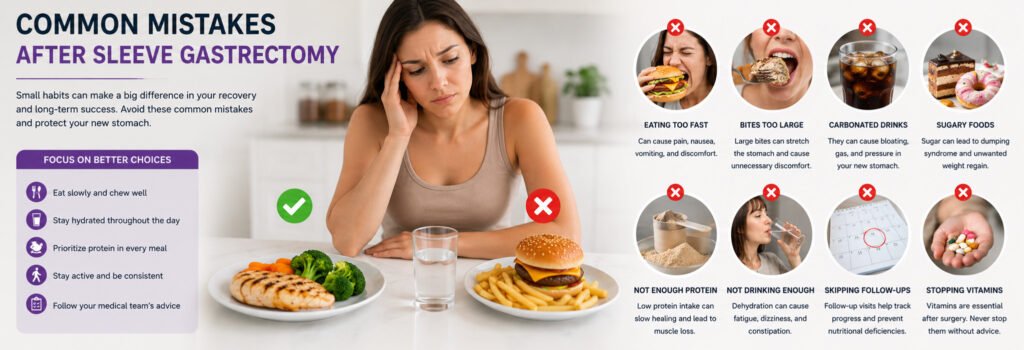
Common Mistakes After Sleeve Gastrectomy
Many patients feel motivated after surgery, but small habits can affect comfort, recovery, and long-term results.
Common mistakes include:
- Eating too fast
- Taking bites that are too large
- Drinking carbonated beverages
- Skipping protein
- Not drinking enough fluids
- Returning to solid foods too quickly
- Eating sugary snacks
- Missing follow-up appointments
- Stopping vitamins without medical advice
A successful recovery is not about perfection. It is about consistency, follow-up, and learning how the new stomach responds to different foods.
Planning Recovery in Turkey After Sleeve Gastrectomy
International patients traveling to Turkey for sleeve gastrectomy should understand the diet plan before returning home. The first weeks after surgery involve nutrition changes, fluid goals, follow-up appointments, and possible medication or supplement instructions.
Before leaving Turkey, patients should ask:
- Which diet stage should I follow now?
- When can I move to the next stage?
- How much protein should I aim for?
- How much fluid should I drink daily?
- Which vitamins or supplements do I need?
- Who should I contact if I cannot tolerate food or liquids?
- When should I have follow-up blood tests?
Carenfly helps international patients coordinate hospital communication, travel planning, accommodation, transfers, and follow-up preparation during their medical journey in Turkey.
Related Bariatric Surgery Guides
Related Bariatric Surgery Guides
Explore more resources about bariatric surgery, recovery, treatment planning, and medical travel in Turkey.
- Sleeve Gastrectomy in Turkey
Learn about the procedure, cost, recovery, eligibility, and international patient support.
- Bariatric Surgery in Turkey
Explore weight loss surgery options and treatment planning in Turkey.
- Gastric Bypass Surgery in Turkey
Compare gastric bypass with other bariatric procedures and recovery expectations.
- Mini Gastric Bypass in Turkey
Understand how mini gastric bypass works and who may be suitable.
- Gastric Balloon in Turkey
Learn about non-surgical weight loss options for selected patients.
Frequently Asked Questions
What can I eat after sleeve gastrectomy?
Most patients follow a staged diet that begins with liquids, then moves to pureed foods, soft foods, and eventually regular solid foods as tolerated.
When can I eat normal food after gastric sleeve surgery?
The timeline varies by patient and hospital protocol. Many patients gradually return to more regular foods several weeks after surgery, but this should be guided by the bariatric team.
Can I drink coffee after sleeve gastrectomy?
Coffee should only be resumed if approved by the medical team. Some patients may need to avoid caffeine in the early recovery period.
Can I drink carbonated drinks after gastric sleeve surgery?
Carbonated drinks are commonly avoided after sleeve gastrectomy because they may cause discomfort, bloating, or poor tolerance.
How much protein do I need after sleeve gastrectomy?
Protein goals vary by patient. Many bariatric programs recommend protein-focused nutrition, but the exact target should be provided by the surgeon or dietitian.
What happens if I eat too much after sleeve gastrectomy?
Eating too much or eating too quickly may cause nausea, vomiting, discomfort, or reflux. Patients should eat slowly and stop before feeling overly full.
Do I need vitamins after sleeve gastrectomy?
Many patients need long-term vitamins or supplements after bariatric surgery. The exact plan should be based on medical advice and blood test monitoring.
Does Carenfly help with sleeve gastrectomy recovery planning in Turkey?
Yes. Carenfly helps international patients understand treatment options, coordinate medical travel, communicate with healthcare providers, and prepare for recovery after sleeve gastrectomy in Turkey.
Start Your Free Bariatric Consultation